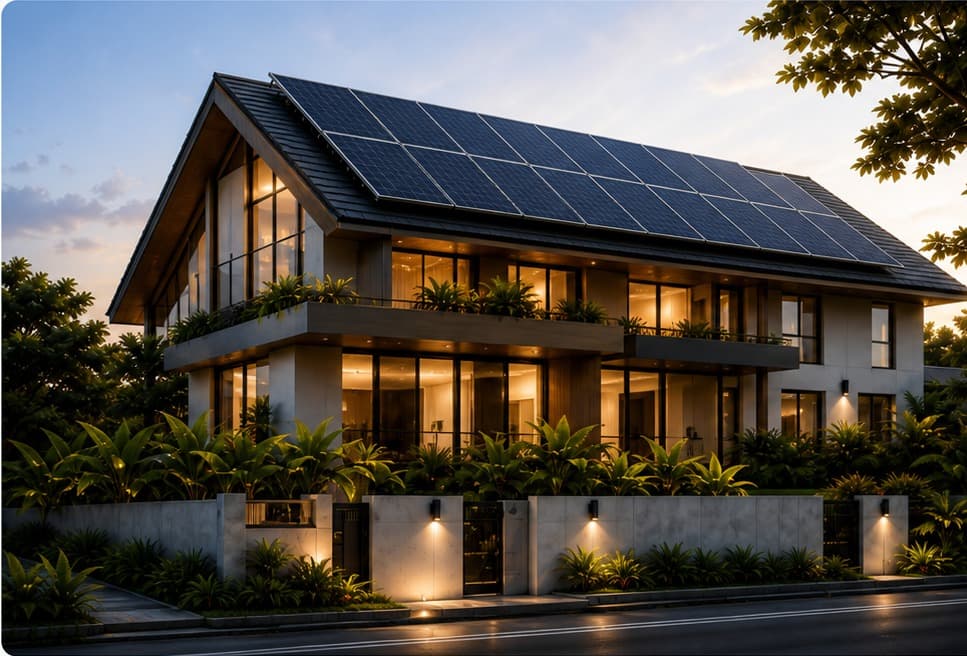
12kWp Solar Covers Your EV and Three Aircon Units
A numbers-first guide for Singapore landed homeowners combining rooftop solar with home EV charging, with full S$ calculations.
Why should this article concern you?
- 1
An EV adds S$570–S$763/year to your grid bill at S$0.3478/kWh based on 30km daily driving.
- 2
A 12kWp solar system covers household loads and EV charging, saving S$3,902/year — a 15kWp system reaches S$4,656/year.
- 3
Each year you charge from the grid instead of solar, you hand back S$600+ that your own panels would have covered for free.

Your EV is a silent subscription. Every night you plug it in at home, your grid bill climbs by roughly S$1.90 before you have had your morning coffee. Add a Singapore summer's air-conditioning load and you are looking at an electricity bill that grows faster than your salary. There is a number buried in the EV-plus-solar calculation that most installers do not show you upfront, and by the end of this guide you will see exactly why sizing your system correctly from day one changes the entire payback picture.
What Your EV Actually Costs to Charge at Home
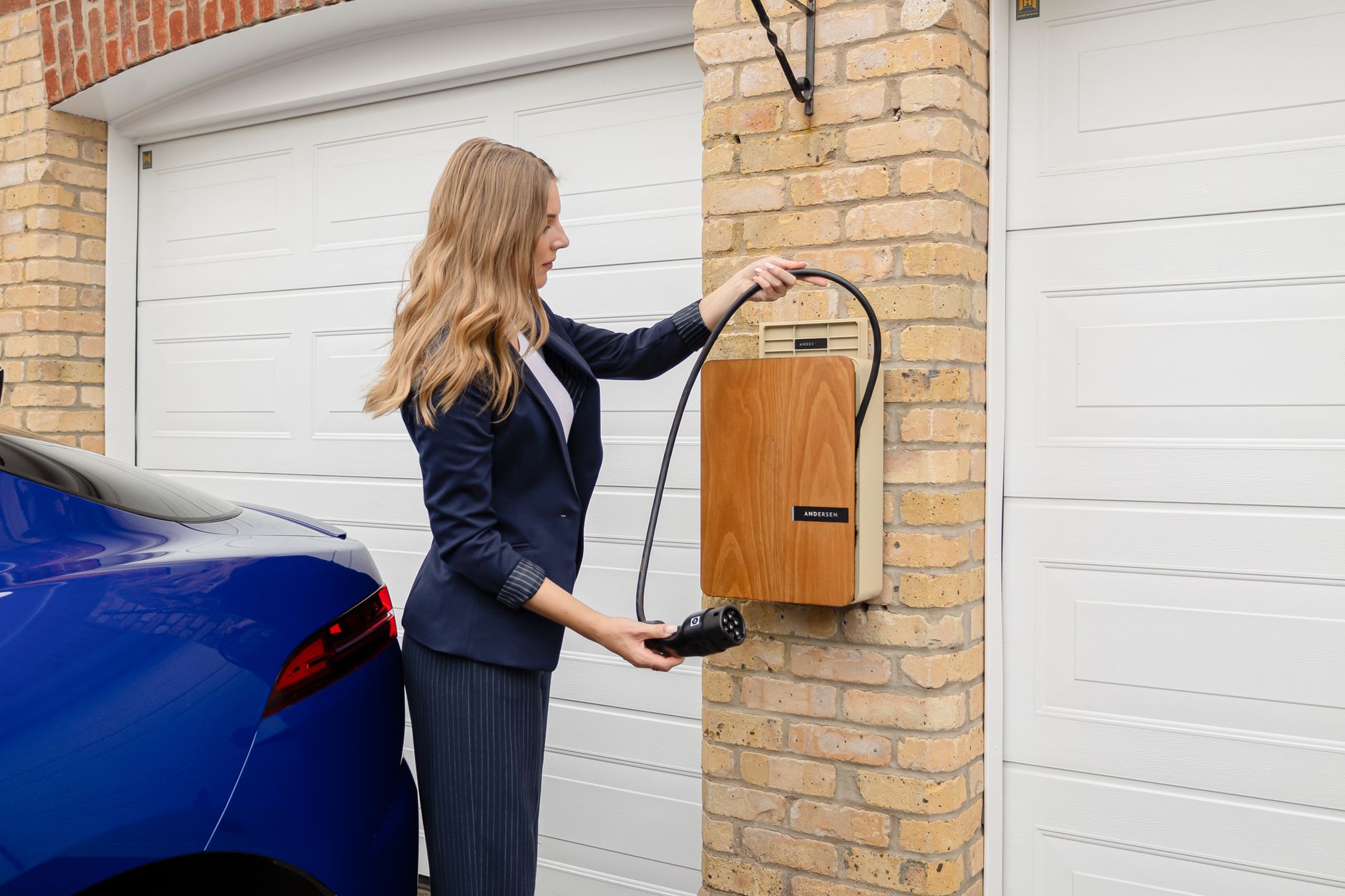
Popular EVs in Singapore draw 15–20 kWh per 100km. The BYD Atto 3 sits at roughly 16 kWh/100km under real-world conditions, and the Tesla Model 3 Standard Range lands near 15 kWh/100km, according to published efficiency data from BYD Singapore and Tesla Singapore.
Average daily driving in Singapore hovers around 30km, giving you a charging load of 4.5–6 kWh per day. At the current regulated tariff of S$0.3478/kWh (inclusive of 9% GST, EMA Q3 2026), that daily draw costs S$1.56–S$2.09 per day. Over a full year, your EV adds S$570–S$763 to your electricity bill with zero driving pleasure offset , a charge you either pay the grid or cover with your own rooftop.
Why Standard Solar Sizing Leaves Your EV Uncovered
A non-EV terrace house in Singapore typically runs 10kWp of solar and generates around 11,060 kWh/year (at 1,106 kWh/kWp/year, Sunnify estimate). Add an EV charging 5 kWh/day and you are adding 1,825 kWh/year to your consumption , without resizing, your self-consumption ratio jumps and your export income drops, but you still pull EV charging from the grid at night because the sun has set.
The fix is straightforward: add 3–5kWp to your planned system to cover the EV load. A 12–15kWp system generates 13,272–16,590 kWh/year (Sunnify estimate), enough to cover a typical Singapore terrace house's combined air-conditioning, appliance, and EV charging demand when charging is timed correctly.
Note: These generation figures assume standard roof orientation at 10–15 degrees pitch with no significant shading , actual yield varies by roof type and direction. Confirm with your installer or check orientation guidance at EMA's website.
The Daytime Charging Advantage You Are Probably Ignoring
Most EV owners charge overnight out of habit , that is the single most expensive habit in a solar household. Solar panels generate from roughly 8am to 5pm, peaking between 10am and 2pm. If your car sits in the driveway or a covered garage during working hours, you can shift your charging schedule to absorb solar output directly rather than exporting it at the lower SCT rate of S$0.2581/kWh.
Every kWh you self-consume from your panels saves you S$0.3478. Every kWh you export earns S$0.2581 , the gap is S$0.0897/kWh. For an EV consuming 1,825 kWh/year, shifting from night-grid charging to daytime solar charging closes a gap worth S$164/year compared with exporting that energy instead.
The Full Calculation: 3 Aircon Units, One EV, 12kWp System

Here is a concrete example built on a typical Singapore terrace house with three aircon units running an average of six hours daily, plus one EV charging 5 kWh/day with daytime optimisation. Total annual household consumption: approximately 14,500 kWh (Sunnify estimate, inclusive of EV load).
A 12kWp system generates 13,272 kWh/year. With daytime EV charging and sensible appliance scheduling, self-consumption reaches roughly 40%, meaning 5,309 kWh consumed directly and 7,963 kWh exported. The savings break down as follows:
- Self-consumption savings: 5,309 kWh × S$0.3478 = S$1,846/year
- Export income: 7,963 kWh × S$0.2581 = S$2,056/year
- Total annual benefit: S$3,902/year
System cost for a quality 12kWp installation in Singapore runs S$12,000–S$19,200 (at S$1,000–S$1,600/kWp, Sunnify estimate). At S$15,000 mid-range, payback lands at 3.8 years , the system then runs free for the remaining 21+ years of its warranted life, generating a total benefit of roughly S$81,942 over 25 years before accounting for tariff increases.
If you had sized at 10kWp without accounting for the EV, you would generate 11,060 kWh/year and still draw S$570–S$763/year of EV charging from the grid. The incremental cost of adding 2kWp upfront , roughly S$2,000–S$3,200 , pays back in under four years purely on the EV charging offset. Undersizing now locks in that avoidable cost for the life of the system.
Sizing Your Solar System for an EV Household
The rule of thumb is simple: start with your non-EV baseline system size, then add 1kWp for every 15km of average daily driving. A household averaging 30km/day adds 2kWp; one averaging 50km/day adds 3–4kWp. This ensures the additional generation covers the EV load without cutting into export income from your baseline household consumption.
If you plan to add a second EV within five years, size for both now rather than retrofit later. If your roof space allows a 15kWp system, the economics of going larger are compelling: a 15kWp system generates 16,590 kWh/year, and at 40% self-consumption, annual benefit reaches S$4,656/year (Sunnify estimate), with payback under 4.5 years at S$20,000 installed cost. Check whether your roof can accommodate a larger system before your installer visits.
One practical point on charging hardware: a standard 7.4kW AC home charger is more than sufficient for overnight or daytime charging at these daily distances. You do not need a 22kW fast charger for home use, and the higher-rated unit draws more power than your panels can typically supply at once during peak hours. A 7.4kW charger paired with a smart timer set to solar peak hours is the correct combination for a solar-plus-EV terrace house. EMA covers charger standards and grid connection requirements for landed homes.
Your Cost Per Kilometre Drops to Zero at Year 3.8
The moment your EV starts running on sunlight instead of the grid, your cost per kilometre drops to zero. That is the number your fuel card will never match.
Here is the insight from the opening: the reason most solar-plus-EV calculations look better than expected is that the EV load is unusually easy to shift. Unlike your air-conditioning, which runs when it is hot, your car charges when you schedule it , that schedulability makes an EV the single most solar-compatible load in your terrace house.
Picture a Tuesday in January 2030. SP Group announces Q2 2030 tariff rates. Your panels have been covering the car for four years, and your effective cost per kilometre on electricity has been exactly zero for every km those panels generated. The homeowner down the street with no solar just absorbed another increase on top of their charging bill.
Every quarter without solar is a quarter you pay the grid rate on both your household load and your EV. The EV makes that gap larger, not smaller, because it adds a discretionary load you could have covered for free. When you run your solar estimate, use the EV toggle to input your daily driving distance and watch what it does to the payback year. The answer will not surprise you , it will just make you wish you had done it sooner.
For the full breakdown of whether a solar-plus-EV system stacks up for your specific terrace house, including roof size, orientation, and current bill, read the complete Singapore solar ROI guide.
What does this mean for your home?
- Size for your EV from day one. Add at least 2kWp to your planned system for a 30km/day driver. Retrofitting panels later costs more per kWp than installing them upfront.
- Switch your charging schedule to daytime hours. Setting your charger timer to 10am–2pm converts export income into direct savings worth an extra S$0.0897/kWh on every EV unit, adding up to S$164/year at typical usage.
- Run the numbers for your specific roof. Use the Sunnify solar estimate with the EV input to see your personalised payback period and 25-year savings figure.
How much extra solar capacity do I need if I own an EV in Singapore?
For average Singapore daily driving of 30km, add roughly 2kWp to your planned system size to cover the EV charging load. At 15–20 kWh/100km efficiency, a 30km daily drive consumes 4.5–6 kWh, which a 2kWp addition generates comfortably across a full Singapore sun day. If you drive more than 50km daily or plan a second EV, add 3–5kWp instead. Check your roof capacity before finalising system size with your installer.
Is it better to charge my EV during the day or at night when I have solar panels?
Daytime charging is significantly better. Every kWh your EV absorbs directly from your panels during solar hours saves you S$0.3478 (the grid tariff you avoid), whereas that same kWh exported to the grid earns only S$0.2581 under Singapore's Solar Contestable Tariff. The difference is S$0.0897/kWh, worth roughly S$164/year at typical EV usage. A smart charger with a timer set to 10am–2pm captures this advantage automatically. EMA publishes charger standards applicable to Singapore landed homes.