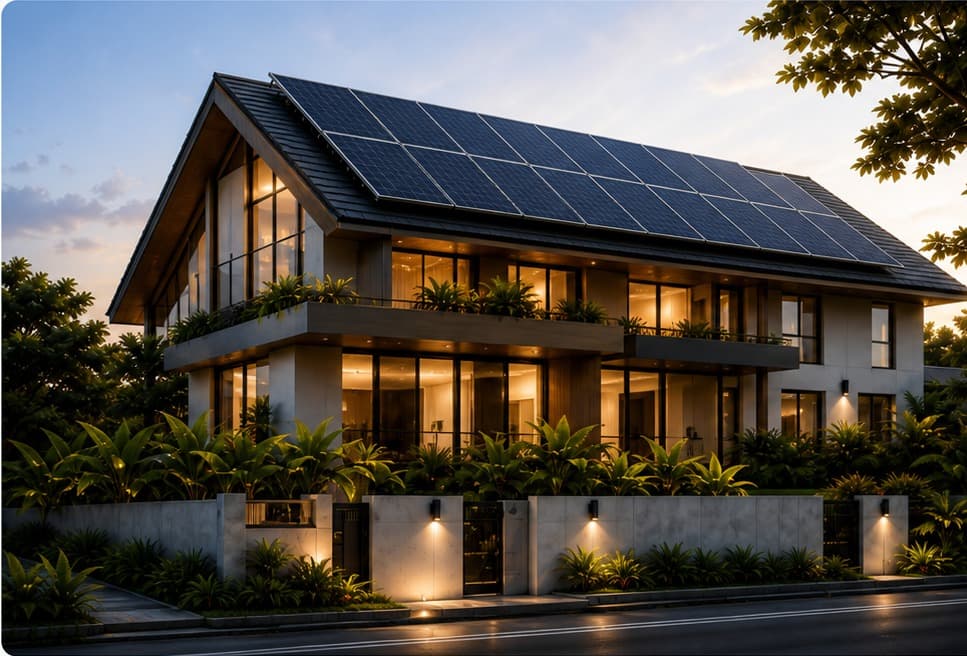
Anti-Islanding Shuts Your Solar Panels Off in Blackouts
Grid-tied solar panels stop working in a Singapore blackout by design. Here is what actually happens, why, and whether battery backup is worth the cost.
Why should this article concern you?
- 1
Grid-tied solar panels shut off automatically during any Singapore blackout, by law.
- 2
A hybrid inverter with battery backup keeps your fridge, lights and router running through any outage.
- 3
Every year you delay hybrid, you export surplus solar at S$0.2581/kWh instead of storing it for your own use.

Your solar panels are generating electricity, the sun is shining, and the grid goes down. The panels stop. Every watt, instantly. You assume this is a malfunction. It is not. Your system did exactly what EMA and SP Group require it to do, and by the end of this guide you will understand why that rule exists, whether it matters for your terrace house, and the precise cost of overriding it.
The Law Your Inverter Enforces: Anti-Islanding Protection
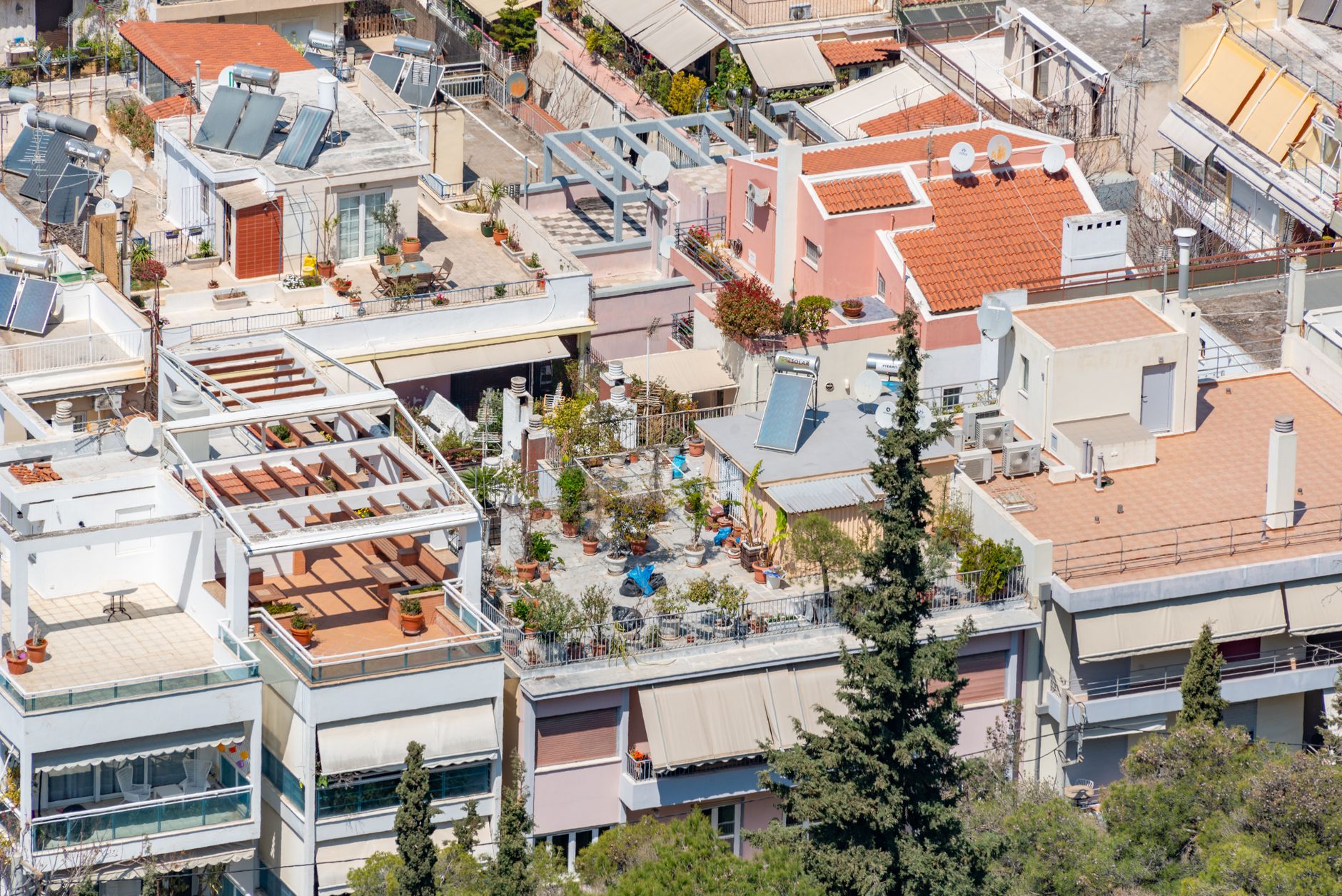
Anti-islanding protection is the technical name for the automatic shutdown. When the grid goes down, your inverter detects the loss of the grid signal within milliseconds and disconnects your panels from the system entirely.
The reason is simple and serious. SP Group sends technicians onto the network to fix the fault. If your panels keep feeding electricity into a line the technician believes is dead, the result can be fatal. SP Group's connection standards mandate anti-islanding compliance on every grid-tied system. There is no waiver and no workaround for a standard installation.
Your inverter monitors grid voltage and frequency continuously. The moment those signals fall outside the approved band, the inverter opens its internal relay and your roof becomes electrically invisible to the network. Sunshine or no sunshine, it does not matter.
Three Choices, Three Very Different Bills
You have three paths when you install solar on your terrace house, and the right answer depends almost entirely on how often the grid actually fails where you live.
Option 1: Grid-tied only. This is what most Singapore landed installations use. Generation cost is lowest, payback is fastest, and the system is simplest. During a blackout, you have no solar power. You also have no grid power. You wait, the same as your neighbour without panels.
Option 2: Hybrid inverter with battery backup. A hybrid inverter can isolate your terrace house from the grid and continue powering a designated set of circuits using stored battery energy and live solar generation. When the grid fails, the inverter switches to island mode automatically, typically within 20 milliseconds.
Your fridge stays on. Your router stays on. Your lights stay on. The cost is real: a Tesla Powerwall 3 (13.5 kWh) adds approximately S$12,000 to S$15,000 installed to your system budget. A BYD Battery Box Premium HVS at 10.2 kWh runs approximately S$9,000 to S$13,000 installed. An Enphase IQ Battery 5P system scaled to 15 kWh sits at roughly S$14,000 to S$18,000 installed. These figures are Sunnify estimates based on Singapore market quotes and will move with exchange rates and installer margins.
Option 3: Generator. A petrol or gas generator gives you backup power completely independent of solar. A quality inverter generator capable of running your fridge, fans, and lighting costs S$1,500 to S$4,000. It runs on fuel, produces noise and fumes, and requires manual starting. You get backup power that works , and you will hate using it during the rare extended outage.
Note: Battery backup pricing changes as manufacturers update Singapore distribution agreements. Verify current quotes with at least two registered installers before budgeting, or check the EMA registered solar installer list for accredited suppliers.
Singapore Grid Reliability: The Number That Changes Everything

Singapore's grid is not like most grids. EMA's published statistics show that the average customer interruption duration in Singapore sits below 1 minute per year. That figure places Singapore among the top five most reliable grids globally.
For landed property areas specifically, outages tend to be shorter and less frequent than in older HDB estates, because the cable infrastructure serving low-density residential neighbourhoods is typically newer and carries lighter loads. When outages do occur, SP Group's fault restoration time in residential zones averages well under two hours.
Run the cost comparison honestly. Adding S$12,000 in battery capacity to protect against fewer than 60 minutes of annual outage time means you are paying roughly S$200 per minute of backup coverage per year over a 10-year battery warranty period. For most terrace house owners, that arithmetic does not hold.
The cases for backup that genuinely stack up: you run medical equipment on continuous power, your home office means downtime costs real money, or a 30-minute disruption with young children outweighs the financial logic. "I might lose some food in the fridge" does not, given Singapore's outage duration statistics.
If You Want Backup: Size It for Essential Circuits Only
The single most expensive mistake in solar battery sizing is trying to back up your whole terrace house. Your air-conditioning units alone draw 2 to 4 kW each. Three units running overnight would drain a 13.5 kWh Powerwall in under three hours with no solar input.
The practical approach is a backed-up essential circuit panel: fridge, lighting, a few power points, router, and possibly one fan. That load runs to roughly 400 to 700 W continuously. A 10 kWh battery covers that load for 14 to 25 hours without any solar input at all. Add daytime solar generation and you have indefinite coverage through any realistic Singapore outage.
Ask your installer to quote a hybrid inverter with a single battery unit on a sub-panel, rather than full-home backup. The cost difference between essential-circuit backup and whole-home backup is often S$6,000 to S$10,000, and the functional difference during a Singapore outage is negligible.
The financial case for the hybrid system also improves independent of backup. A hybrid inverter lets you store surplus solar for evening use rather than exporting at the S$0.2581/kWh SCT rate, run time-of-use arbitrage if SP Group introduces time-variable pricing, and expand battery capacity later as prices fall. You are not just buying a blackout solution. You are buying optionality.
When you install hybrid from day one, every future tariff increase accelerates your payback rather than threatening it.
A standard 10 kWp terrace house system generates approximately 11,060 kWh per year (Sunnify estimate, based on Singapore's generation benchmark of 1,106 kWh/kWp/year). At the current tariff of S$0.3478/kWh, savings and export income from that system total approximately S$3,100 per year. Adding a hybrid inverter and single battery unit pushes total system cost from roughly S$12,000 to approximately S$24,000 depending on battery choice, extending payback from approximately 3.9 years to approximately 5.5 to 7.7 years (Sunnify estimates). That is still well inside the 25-year system life.
When you run your numbers, use the Sunnify solar estimate tool to model both scenarios side by side. The tariff sensitivity slider shows what happens to your payback when rates move, which they will. For the full breakdown of whether solar stacks up financially on your specific roof, the ROI guide for Singapore homeowners covers every variable in detail.
Further reading: battery storage and overnight aircon · Tesla Powerwall vs BYD vs Sungrow compared · EMA solar and electrical licensing · SP Group grid connection standards.
What does this mean for your home?
- Verify your inverter type before assuming backup is possible. A standard string inverter cannot provide blackout power under any configuration. Only a hybrid inverter with a connected battery can island your terrace house during a grid outage.
- If you want backup, size for essential circuits only. Backing up your whole terrace house adds S$6,000 to S$10,000 in unnecessary battery capacity. A sub-panel covering fridge, lighting, and router draws under 700 W and a single 10 kWh battery unit lasts through any realistic Singapore outage.
- Run the numbers for your specific roof before deciding. Use the Sunnify solar estimate to see your payback under grid-tied and hybrid scenarios at the current S$0.3478/kWh tariff.
Your Move
You now know the precise cost the opener promised: overriding anti-islanding protection on your terrace house runs S$9,000 to S$18,000 in battery hardware, and Singapore's grid makes that cost hard to justify on reliability alone. The smarter question is not whether to add backup, but whether a hybrid inverter earns its keep on the arbitrage and tariff-hedging case before any blackout ever happens.
When you get your first Sunnify estimate, run the hybrid scenario alongside the grid-tied baseline. A year from now, with panels already on your roof and a battery storing your evening power at S$0.3478/kWh rather than exporting it at S$0.2581/kWh, the blackout question will feel like a bonus rather than the deciding factor.
Do solar panels work during a power cut in Singapore?
Standard grid-tied solar panels stop generating the moment the grid goes down. This is required by EMA and SP Group under anti-islanding regulations, which protect linemen working on the network during an outage. The only way to have solar power during a blackout is to install a hybrid inverter paired with a battery, which can isolate your terrace house and continue operating independently. See the full Singapore solar ROI guide for how battery backup affects your payback period.
Is battery backup worth it for solar in Singapore?
For most Singapore landed installations, the financial case is marginal. Singapore's grid averages under one minute of outage per customer per year, making the S$9,000 to S$18,000 cost of battery backup difficult to justify on reliability grounds alone. The case improves if you have medical equipment requiring continuous power, a home office where downtime has real cost, or if you value the energy arbitrage and tariff-hedging benefits a hybrid system provides beyond backup. Size for essential circuits only and compare quotes from at least two EMA-registered installers.