China Batteries Will Flood Global Supply by 2030
Carnegie Endowment report: China will massively oversupply global batteries by 2030, cutting storage costs for Singapore solar homeowners.
Why should this article concern you?
- 1
China's battery capacity could hit 6,720 GWh by 2030, against global demand of just 5,100 GWh.
- 2
LFP batteries already 24-50% cheaper from China; that price pressure reaches Singapore installers within months.
- 3
Battery costs falling now means your terrace house storage payback shrinks before you even get a quote.

A new report from the Carnegie Endowment for International Peace projects that China alone could manufacture between 5,862 GWh and 6,720 GWh of battery cell capacity by 2030, against total global demand of just 4,000 GWh to 5,100 GWh. For your terrace house solar decision, this is the supply story that quietly reshapes every number on your installer's quote. By the end of this article, you will see exactly how a Chinese manufacturing surplus 8,000 kilometres away puts money back in your pocket, and sooner than most people expect.
The Carnegie Report: What the Numbers Actually Say

The pv magazine report on the Carnegie findings puts the scale of China's manufacturing lead in plain numbers. OECD countries combined will reach only about 1,881 GWh of capacity by 2030, with a maximum ceiling of 2,422 GWh, while emerging markets including India and Indonesia add a further 217 GWh. China's output alone exceeds the sum of every other producer on earth, by a wide margin.
The chemistry that matters most for your roof is lithium iron phosphate, or LFP. The Carnegie report identifies LFP as the single largest supply chain concentration risk for Western economies: 98% of global LFP production capacity sits inside China. In Europe, Chinese LFP cells already trade at 24% to 50% below locally produced alternatives. Chinese battery exports exceeded $6 billion per month in 2025, with Europe absorbing nearly half of all shipments.
How a Global Surplus Reaches Your Roof in Singapore
Oversupply is a price signal. When a manufacturer builds more capacity than the world can absorb, the only lever left is price. That is already happening: LFP batteries now account for roughly half of the entire global lithium-ion market, driven by electric vehicles and battery energy storage systems. More supply chasing the same pool of buyers means the cost-per-kWh of storage keeps falling, and Singapore installers source almost entirely from Chinese manufacturers.
There is typically a three-to-six-month lag between spot price movements in Chinese factories and the quotes you receive from a local installer. That lag is closing as Singapore's solar market matures and installers shorten their procurement cycles. The IEA's solar and storage data shows battery storage costs have already fallen more than 90% over the past decade globally, and the Carnegie report projects the surplus conditions that will keep that trajectory going through 2030.
Note: Singapore installer quotes for home battery systems vary significantly based on brand, capacity, and installation complexity. Confirm current pricing with at least two qualified installers, and check EMA's energy statistics for the latest residential storage deployment data.
Sodium-ion batteries add a second wave to watch. The Carnegie report warns that commercial-scale sodium-ion manufacturing is currently concentrated almost entirely in China, and could follow the same cost trajectory as LFP. For Singapore homeowners, that means a second, potentially cheaper storage chemistry entering the market before the end of the decade.
Your Terrace House Numbers With Storage in the Picture
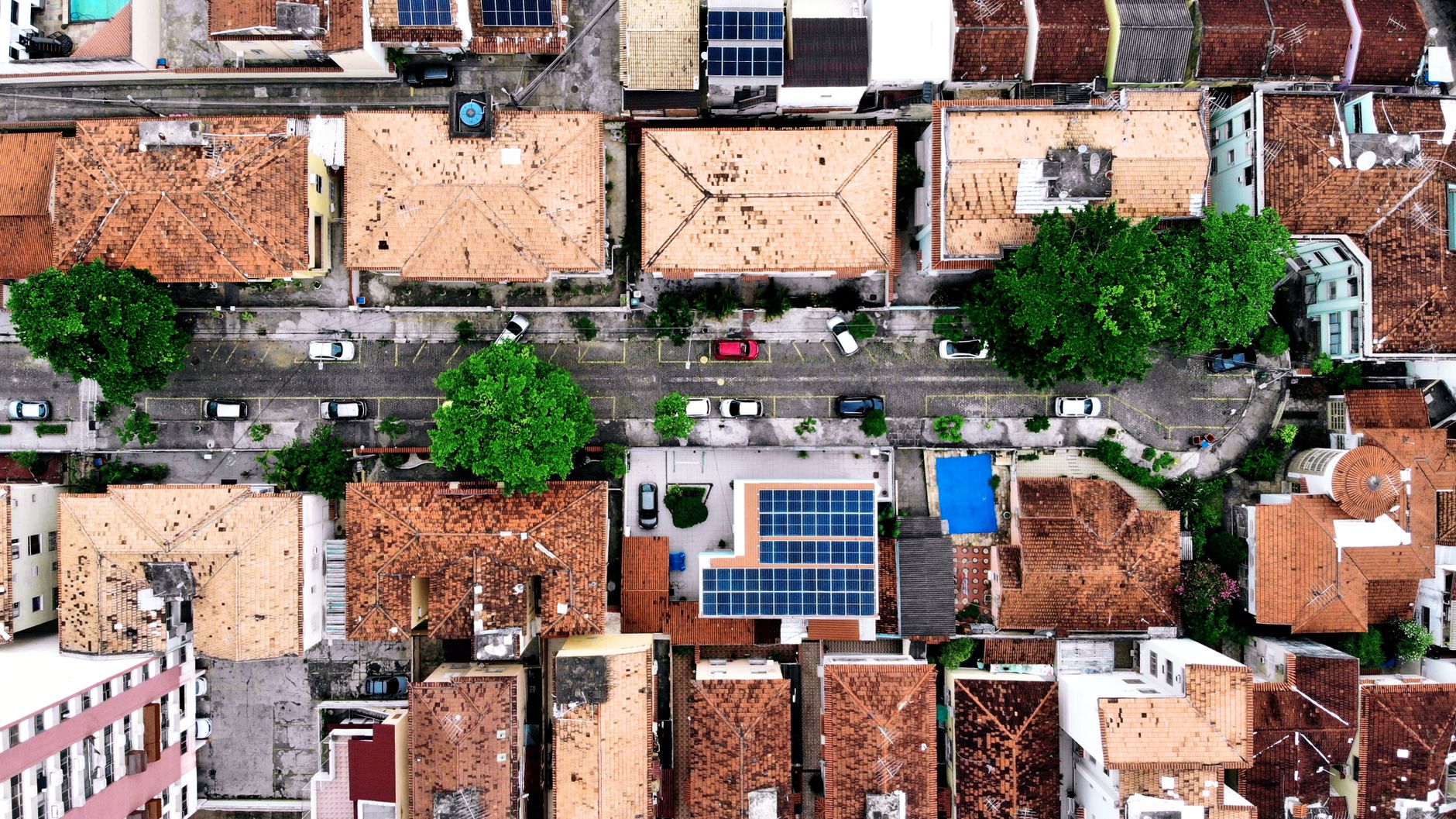
Here is where the global surplus story connects directly to your bill. A standard 10kWp system on a Singapore terrace house generates roughly 11,060 kWh per year (Sunnify estimate, using 1,106 kWh/kWp/year at Singapore's irradiance of 1,580 kWh/m²/year). Without storage, about 75% of that generation exports to the grid at the SCT rate of S$0.2581/kWh, earning S$2,142/year. The remaining 25% you consume directly saves you the full grid tariff of S$0.3478/kWh, worth S$961/year. Total annual benefit: approximately S$3,100.
Add a home battery and the self-consumption ratio shifts dramatically, often to 60% or higher depending on your household load profile. At 60% self-consumption, your direct savings jump to S$2,306/year and export income adjusts to S$1,143/year, for a combined S$3,449/year (Sunnify estimate). The battery pays for itself faster as storage hardware costs fall. See the full ROI breakdown for Singapore landed homes to understand how these ratios play out over a 25-year system life.
Lock the Savings Before the Market Catches Up
Every quarter you stay on the grid while battery prices fall is a quarter where you pay S$0.3478/kWh for electricity your panels could have stored for free.
Here is the insight hinted at in the opening: the surplus does not automatically land in your pocket. Prices fall for buyers who are actively in the market. Homeowners who are already running solar are positioned to add storage at exactly the moment costs bottom out. Those still on full grid power pay S$0.3478/kWh for every unit consumed, and that tariff has risen every year without exception.
Picture this: it is Q2 2028, and your terrace house system has been running for eighteen months. Battery prices have dropped another 20-30% from today's levels, consistent with the Carnegie trajectory. Your installer calls with a retrofit quote that makes the numbers undeniable. You act immediately, because you already understand your roof's generation profile. The neighbour who waited to install solar first is now two steps behind.
The cost of inaction compounds. Each quarter on the grid is a permanent addition to your lifetime electricity bill. The Chinese manufacturing surplus does not erase that cost retroactively. When you run your estimate, look at the storage sensitivity slider and see what a shift from 25% to 60% self-consumption does to your payback period. Run your personalised Sunnify solar estimate and see exactly how the falling storage cost curve changes your numbers today.
What does this mean for your home?
- Get a battery quote now, even if you are not ready to buy. With Chinese LFP production at 98% of global capacity and a surplus projected by 2030, prices will keep falling. A current quote gives you a price anchor to measure future drops against.
- Your solar-plus-storage payback window is shortening. As storage costs fall and Singapore's grid tariff holds at S$0.3478/kWh, the combined system payback period will compress. Homeowners who install solar now are positioned to capture the storage upgrade at optimal pricing.
- Run the Sunnify solar estimate to see your specific numbers. Adjust the self-consumption ratio to model what adding storage does to your terrace house payback and 25-year savings.
Will falling Chinese battery prices actually lower what I pay for storage in Singapore?
Yes, with a lag. Singapore installers source residential battery systems predominantly from Chinese manufacturers, so global price movements flow through to local quotes, typically within three to six months of spot price shifts. The Carnegie Endowment report projects Chinese battery capacity will exceed global demand by 2030, which sustains downward price pressure through the rest of the decade. Check current installer quotes and cross-reference with EMA's residential storage data for the latest Singapore market context.
Should I wait for cheaper batteries before installing solar in Singapore?
No. Solar panels and batteries are separate purchase decisions. Installing solar now captures savings at the current grid tariff of S$0.3478/kWh immediately, while you wait for storage costs to fall further. Every month on full grid power is a month of foregone savings that you cannot recover later. When storage prices reach your target, you retrofit. See the full opportunity cost breakdown to understand why splitting the two decisions usually produces the better financial outcome.
More from Sunnify Solar Releases