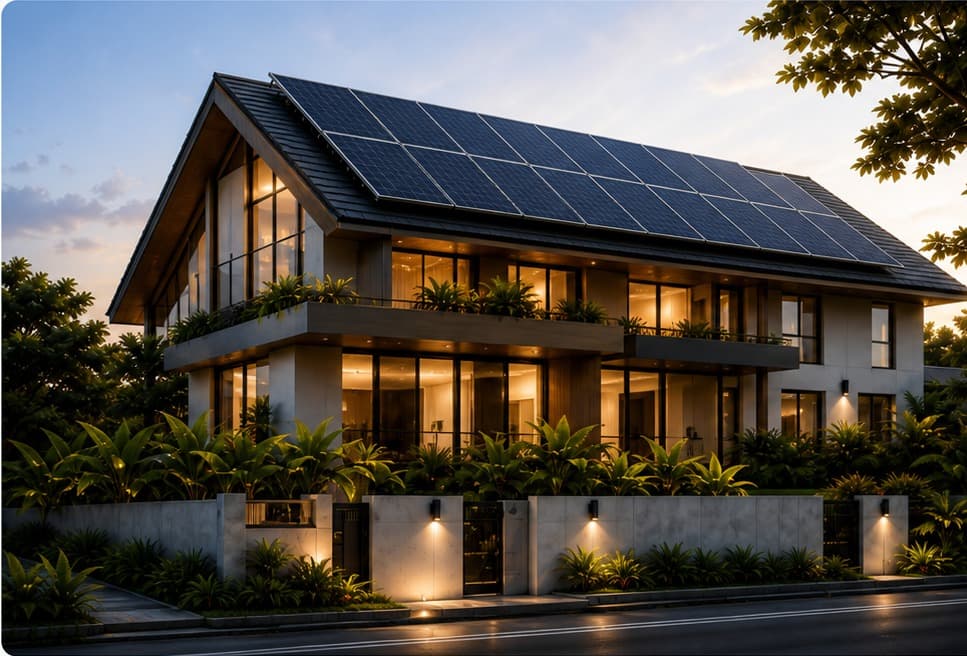
3 Solar Panel Brands for Singapore Terrace Roofs 2026
LONGi, Jinko Tiger Neo, and Canadian Solar HiKu7 dominate Singapore installs in 2026. Here is how to pick the right one for your terrace.
Why should this article concern you?
- 1
LONGi, Jinko Tiger Neo, and Canadian Solar HiKu7 all deliver 21–23% efficiency with 30-year power warranties.
- 2
A 10kWp terrace house system returns roughly S$3,103 per year, with payback in 3.2 to 5.2 years.
- 3
Every quarter you delay, the tariff gap widens — and solar owners keep the difference while you keep paying.

S$3,103 per year is what a 10kWp terrace house system returns at Singapore's current tariff , and the brand of panel on your roof is the smallest variable in that number. Every installer will push a brand at you, and every brand has a glossy spec sheet that looks like a guarantee. The number that actually matters sits buried in a government list you have probably never opened, and by the end of this guide you will know exactly where to find it and what to do once you do.
The Three Brands Your Installer Will Quote You
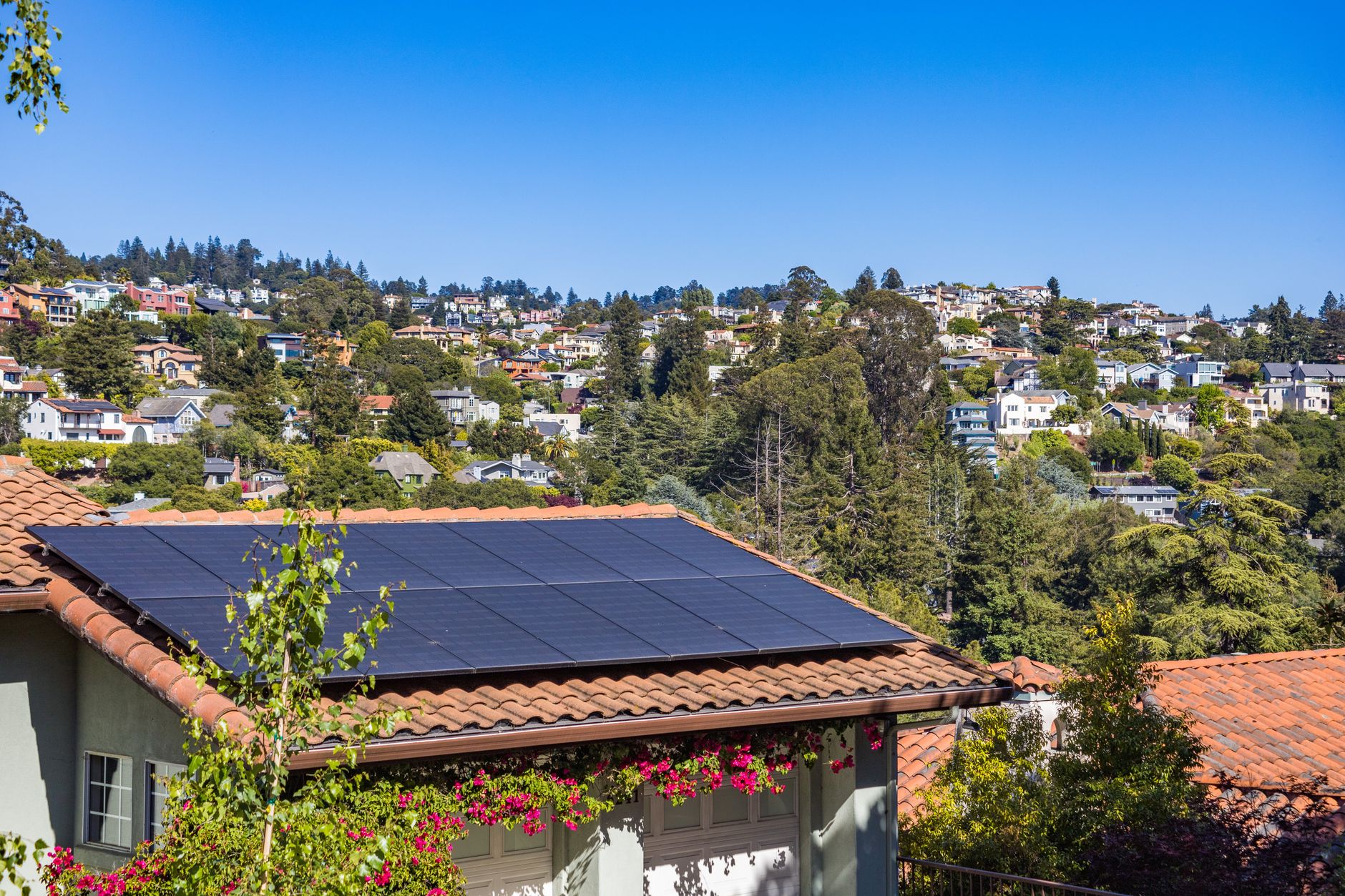
Three brands dominate Singapore residential installations in 2026: LONGi Hi-MO 6, Jinko Tiger Neo, and Canadian Solar HiKu7. All three are monocrystalline, all three are on EMA's approved module list, and all three carry 30-year power output warranties alongside 12-year product (materials and workmanship) warranties.
Efficiency ratings run from 21.3% for the Canadian Solar HiKu7 entry tier to 23.1% for the LONGi Hi-MO 6 top bin. On a constrained terrace roof of 50 square metres of usable panel area, that efficiency gap translates to roughly 900 kWh more generation per year , meaningful, but not the deciding factor you probably assume it is.
PERC vs TOPCon vs HJT: What Those Words on the Spec Sheet Mean
Your installer's quote will mention one of three cell technologies. PERC (Passivated Emitter and Rear Cell) is the older mainstream standard, now largely displaced by TOPCon (Tunnel Oxide Passivated Contact) in new shipments. HJT (Heterojunction Technology) sits at the top of the efficiency ladder but carries a price premium of roughly 15–20% over TOPCon.
For your terrace roof, the practical difference is this: TOPCon panels like the Jinko Tiger Neo and LONGi Hi-MO 6 degrade at approximately 0.4–0.5% per year, against PERC's 0.55%. Over 25 years, a TOPCon panel at 23% starting efficiency still delivers more usable power than a PERC panel that started higher but fell faster.
HJT degrades even more slowly, closer to 0.3% per year, but the upfront premium rarely recovers within a standard payback window at Singapore grid prices.
Key Finding
LONGi, Jinko Tiger Neo, and Canadian Solar HiKu7 all deliver 21–23% efficiency with 30-year power warranties.
What EMA's Approved Module List Actually Does
EMA maintains a published list of modules approved for grid connection in Singapore. SP Group cannot legally connect a panel not on this list to the grid, which means no export credits and no net metering.
The list is not a quality endorsement , it is a minimum compliance gate covering electrical safety, test certification, and performance labelling standards. Not every panel a manufacturer sells globally passes Singapore's approval process, and some lower-cost variants of otherwise reputable brands are absent from the list.
Before you sign any quote, cross-check the exact model number (not just the brand name) against EMA's official solar PV page and ask your installer for the precise module code that appears on the approval list. Two minutes of checking saves a very expensive dispute later.
Note: EMA updates the approved module list periodically, and specific model variants can be added or removed. Confirm your chosen model's approval status directly at EMA's site before signing your contract.
Your Terrace House Returns S$3,103 a Year , Here Is the Maths

A 10kWp system generates approximately 11,060 kWh per year in Singapore, based on the verified generation rate of 1,106 kWh/kWp/year. At 25% self-consumption, you save S$961 per year at the current import tariff of S$0.3478/kWh.
The remaining 75% exported earns S$2,142 per year at the SCT rate of S$0.2581/kWh, for total annual returns of S$3,103. See the full cost breakdown for Singapore landed homes.
On panel pricing, a 10kWp system using mid-range TOPCon panels (Jinko Tiger Neo or LONGi Hi-MO 6 standard bin) typically costs S$12,000–S$15,000 all-in (Sunnify estimate, based on current Singapore installer pricing). Canadian Solar HiKu7 at the same system size tends to quote S$11,000–S$13,500 (Sunnify estimate), reflecting its mid-tier positioning in the Singapore market.
At a system cost of S$13,000, payback lands at 4.2 years, leaving more than 20 years of largely uninterrupted returns across the panel's warranted life.
Installer Workmanship Decides More Than the Panel Brand
Every one of the three brands above will deliver within a few percentage points of its rated output if fitted correctly on a suitable roof. The variable that separates a great installation from a mediocre one is the cable routing, the mounting rail alignment, the inverter sizing, and the quality of the DC isolators and connectors your installer uses on the day.
A LONGi Hi-MO 6 panel at 23% efficiency, fitted with undersized cables and a mismatched string configuration, will underperform a Canadian Solar HiKu7 at 21.3% fitted with care. Ask any installer you quote for a past installation you can visit, and ask specifically how they handle cable management on a hipped terrace roof.
When you run your estimate and see the 25-year return figure, understand that almost all of it rests on who climbs your roof, not whose logo is on the panel.
After-sales support follows the same logic. All three brands operate Singapore or regional warranty service, but the practical question is whether your installer will still be operating when you need a warranty claim actioned in year 8.
Check their incorporation date, ask for references from installations done at least three years ago, and read their contract's warranty transfer clause carefully. The full ROI breakdown shows how after-sales risk factors into long-run returns.
How to Choose: The Four Questions That Actually Matter
First, confirm the exact model number is on EMA's approved module list. Second, get three quotes using the same panel brand and system size so you are comparing installer margin, not panel specs.
Third, ask each installer for their degradation guarantee in writing , the 30-year power warranty should guarantee no less than 87.5% of rated output at year 25 for a quality TOPCon product. Fourth, check what happens if your installer ceases trading , does the panel manufacturer honour the warranty directly, and what is their Singapore claims process?
The panel brand decision, once you have confirmed EMA approval, is mostly a question of price sensitivity and roof space. If your terrace roof is tightly constrained, pay for the higher-efficiency LONGi or Jinko bin to maximise kWh per square metre. If roof space is generous and your primary goal is shortest payback, Canadian Solar's lower price point at 21.3% efficiency often wins on pure financial return.
Run your numbers on the Sunnify solar estimator using your actual roof dimensions to see which scenario applies to your terrace house.
Your Move: Open the EMA List Before Your Next Installer Meeting
That government list from the opening , the one you probably have not opened , is the EMA approved module list at ema.gov.sg. When you sit down with your next installer quote, you will have the exact model code in front of you and the list open in another tab, and you will be the only person in that meeting who has done that check.
When your system goes live, the tariff you are currently paying stops being your problem. Singapore's historical tariff data shows consistent upward pressure over any rolling five-year window , and every quarter that pressure builds, a solar owner on your street is pocketing the difference while your bill absorbs it. That gap stops the day your panels power up.
What does this mean for your home?
- Check EMA approval before you sign. Ask your installer for the exact model code and cross-check it against EMA's approved module list at ema.gov.sg , brand name alone is not sufficient confirmation.
- Prioritise installer track record over panel brand. Request references from installations completed at least three years ago and ask specifically how the installer handles cable management and inverter sizing on terrace rooftops.
- Run your roof dimensions through the Sunnify solar estimate to see whether a high-efficiency panel or a competitively priced mid-tier panel delivers the better payback for your specific terrace house.
Which solar panel brand is best for a Singapore terrace house in 2026?
LONGi Hi-MO 6, Jinko Tiger Neo, and Canadian Solar HiKu7 are all strong choices and all appear on EMA's approved module list. LONGi and Jinko offer slightly higher efficiency (up to 23.1%) suited to space-constrained roofs, while Canadian Solar's lower price point often delivers the fastest payback on larger roof areas. Installer quality and after-sales reliability matter more than brand differentiation once you have confirmed EMA approval.
How do I check if a solar panel is approved by EMA in Singapore?
EMA publishes a regularly updated list of approved solar PV modules on its official website. You need the exact model code from your installer's quote, not just the brand name , some lower-cost variants of well-known brands do not appear on the list. Visit EMA's solar PV page and search for your specific model before signing any installation contract.
More from Sunnify Solar Releases