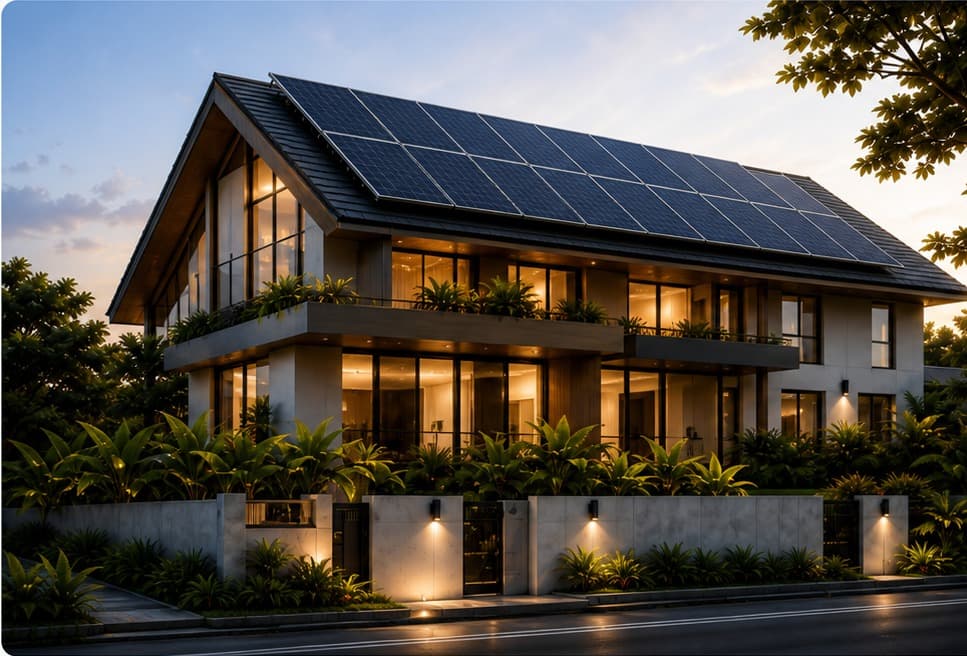
Landed Homeowners Save S$4,656 a Year HDB Residents Cannot
HDB flat owners cannot install rooftop solar individually. Landed homeowners can, and the financial gap is S$4,656 a year.
Why should this article concern you?
- 1
HDB residents cannot install individual rooftop solar; only HDB fits panels on common areas via SolarNova.
- 2
A landed homeowner gains up to S$4,656 per year in solar savings and export credits HDB residents cannot access.
- 3
Every year your landed home sits without solar, you pay the full grid tariff that solar owners stopped paying years ago.

HDB residents ask this question constantly, and the answer is simple and permanent: you cannot install solar panels on your HDB flat. Your landed neighbour two streets away can, and the financial gap between you compounds every single quarter. By the time you finish this guide, you will understand exactly why the rules work this way and what a terrace house owner gains that you never will as an HDB resident.
Why HDB Residents Cannot Install Individual Solar Panels
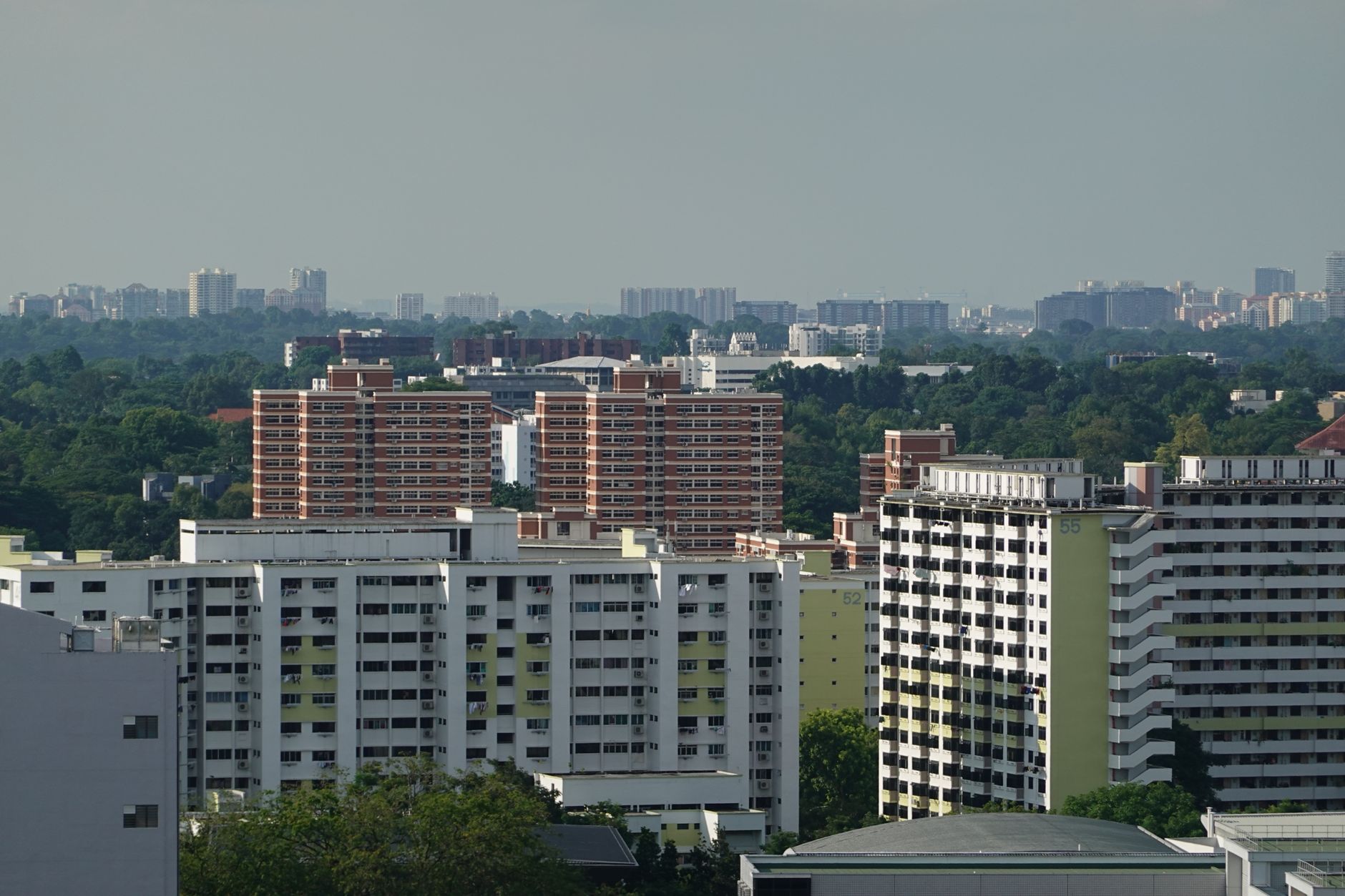
The reason is straightforward: you do not own your roof. In an HDB flat, the rooftop is common property managed by the Housing and Development Board, not by individual flat owners.
Even if you occupy the top-floor unit directly beneath the roof, you have no legal right to install equipment on it or connect it to your individual SP Group meter. The Strata Titles Board framework that governs private condominiums has no equivalent pathway for HDB blocks.
HDB does install solar panels on its blocks, but through its own SolarNova programme. SolarNova aggregates rooftop space across HDB blocks and town council facilities, installs solar at scale, and feeds that electricity back into common services such as corridor lighting and lifts.
The savings reduce the town council's operating costs, not your individual electricity bill. You benefit marginally as a flat owner, but you cannot quantify it, you cannot act on it, and you cannot expand it.
Why Landed Homeowners Have Full Solar Access
A terrace house or semi-detached owner has three things an HDB resident does not: direct roof ownership, an individual SP Group connection, and access to the SP Group Enhanced Connection and Interoperability Standard (ECIS) process for grid-tied solar.
The ECIS process is the formal pathway through which a landed homeowner connects a rooftop solar system to the national grid. It covers metering, export arrangements, and the technical standards your installer must meet.
Without individual roof ownership and a separately metered SP Group account, this pathway does not exist for you.
When a landed homeowner installs a solar system and registers under the EMA's Solar Aggregation Scheme, two financial benefits activate simultaneously. First, every unit of electricity the panels generate and you consume directly replaces grid electricity at S$0.3478/kWh (inclusive of 9% GST, Q3 2026 rate).
Second, every unit the panels generate that you do not immediately consume exports to the grid and earns a Solar Contestable Tariff (SCT) credit of S$0.2581/kWh. Neither benefit exists for an HDB resident in any form.
Ten-Year Electricity Cost: Landed Owner vs HDB Resident
Here is where the gap becomes impossible to ignore. Take a typical Singapore terrace house with a 15kWp solar system. Using Singapore generation data (Sunnify estimate): annual generation is approximately 16,590 kWh at 1,106 kWh/kWp/year.
With a self-consumption ratio of 25%, the household consumes 4,148 kWh directly from solar, saving S$1,443/year at the current tariff. The remaining 75%, or 12,443 kWh, exports to the grid and earns S$3,213/year at the SCT rate. Combined annual benefit: S$4,656/year (Sunnify estimate).
A comparable HDB household consuming the Singapore average of roughly 4,000 kWh/year pays approximately S$1,391/year at the current tariff. Over ten years, assuming a conservative 3% annual tariff increase, that HDB household pays approximately S$16,000 in grid electricity with no offset mechanism whatsoever.
The landed homeowner with solar, over the same ten years, sees cumulative savings and export credits exceeding S$52,000 against a system cost of S$15,000–S$24,000 (Sunnify estimate for a 15kWp installation at S$1,000–S$1,600/kWp). The system pays itself back in approximately 3.2 to 5.2 years. The remaining 20-plus years of panel life generate pure financial return.
Note: Export credit rates and grid tariffs are subject to EMA review each quarter. Verify the current SCT rate before signing any installer contract at EMA's solar energy page.
What You Should Do With This Information Right Now
Every quarter you pay the full grid tariff on a landed home is a quarter your neighbours with solar are not.
If you own an HDB flat and are reading this hoping to find a workaround, there is none worth your time. The structural and legal constraints are real. Your best move is to factor solar access into your next property decision.
If you own a terrace house, semi-detached, or any landed property in Singapore, the question is not whether solar makes financial sense. At S$0.3478/kWh and a payback period well under six years on a system that lasts 25 years, the numbers already answer the question. The only decision left is how many more quarterly tariff increases you absorb before you stop.
When you run your numbers, the tariff sensitivity slider is the most important input. EMA has revised the grid tariff upward in the majority of quarters since 2020. Each increase permanently widens the gap between what a solar owner pays and what you pay. That gap does not shrink when you eventually install. It just stops growing.
Picture your next SP Group bill arriving and showing a near-zero grid charge because your terrace house roof is already working. That is the position landed homeowners with solar are already in. Run your terrace house estimate and enter your current monthly bill. The payback figure will likely surprise you. Then check the roof suitability guide to confirm your specific roof type qualifies before calling an installer.
What does this mean for your home?
- If you own a landed home, you have access to S$4,656/year in solar savings and export credits that HDB residents structurally cannot access. The SP Group ECIS process is open to you today.
- Each quarter without solar on your terrace house roof is another S$1,164 in avoidable grid costs, at the current tariff. That figure grows with every EMA tariff review.
- Run the Sunnify solar estimate to see your specific numbers. Enter your monthly bill and roof size to get a payback period and 25-year return tailored to your terrace house.
Can HDB flat owners ever get solar panels in Singapore?
Individual HDB flat owners cannot install rooftop solar on their units. HDB installs solar collectively through its SolarNova programme on common rooftop areas, with savings going to town council operating costs rather than individual bills. There is no individual opt-in or financial benefit for flat owners. If solar access is a priority, a landed property is the only residential pathway in Singapore.
How much can a landed homeowner actually save with solar in Singapore?
A typical 15kWp system on a Singapore terrace house generates approximately 16,590 kWh/year and delivers combined savings and export credits of approximately S$4,656/year at current tariffs (Sunnify estimate using EMA Q3 2026 data). System payback runs 3.2 to 5.2 years depending on installation cost, leaving 20-plus years of net positive returns. See the full breakdown at our Singapore solar ROI guide.
More from Sunnify Solar Releases