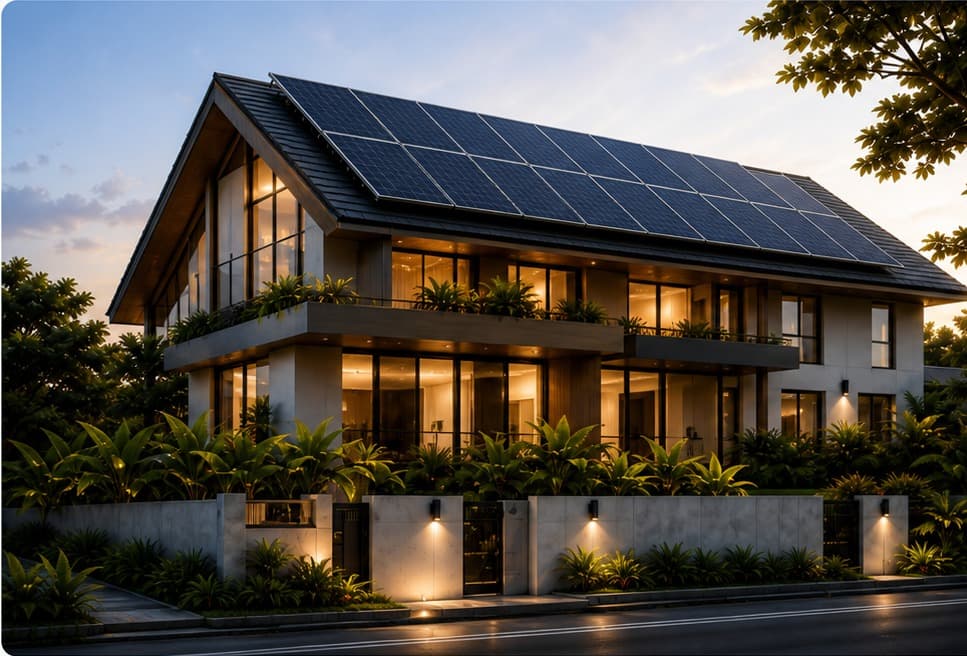
Solar Panels and Home Insurance in Singapore: What You Must Declare
Singapore homeowners who install solar panels must declare the installation to their home insurer. Panels increase the sum insured as a building fixture, adding a modest premium increase. Non-declaration risks policy voidance. The LEW certificate and SP Group registration are the key documents insurers will request.
Key Takeaways
- 1
Failing to declare your solar installation to your insurer voids your cover for any claim related to the panels — and potentially for the entire property if the non-disclosure is material
- 2
Most Singapore home insurers treat solar panels as a building fixture that increases the sum insured — for a S$13,000 to S$20,000 installation this typically adds S$50 to S$150 per year to your premium
- 3
The EMA-required LEW certification and SP Group registration documentation are the primary evidence insurers use to assess the installation's compliance — request copies of both from your installer

Home insurance and solar panels intersect in two places: the obligation to declare material changes to the property, and the need to ensure that the panels themselves are covered under the policy's building fixtures definition. Both are straightforward if handled correctly before the panels go on the roof, and potentially costly if handled after a claim.
Why Solar Panels Are a Material Change You Must Declare
Singapore home insurance policies universally require policyholders to notify the insurer of material changes to the property. A material change is any change that could affect the insurer's assessment of the risk. A S$13,000 to S$20,000 installation of electrical equipment on your roof, with wiring into your main distribution board, a new connection to the SP Group grid, and a permanently mounted structure on the building fabric, clearly meets this threshold.
If you do not declare the installation and subsequently make a claim (for any reason, not necessarily related to the solar panels), the insurer may:
(a) Refuse the claim on the basis that the risk profile changed materially and was not disclosed, or
(b) Void the policy from the date the undisclosed change occurred, which means previous claims could also be revisited.
Neither outcome is theoretical. Non-disclosure is the single most common reason Singapore home insurance claims are disputed. Declaring the installation costs you a modest premium increase and takes one phone call or online form submission.

What the Premium Increase Looks Like
Solar panels are treated as a building fixture under most Singapore home insurance policies, the same category as air conditioning units, water heaters, and built-in cabinetry. The insurer will ask you to increase your building sum insured by the replacement value of the installation. For a S$13,000 solar system, this typically increases the annual premium by S$50 to S$150, depending on your policy, insurer, and existing sum insured. This premium increase is modest relative to the system cost and relative to the financial consequence of voided cover.
Some insurers offer specific solar panel endorsements that cover panel damage (breakage, hail impact, falling objects) separately from the building cover. This is worth asking about, as standard building cover may treat panels as fixtures for liability purposes but have exclusions for accidental physical damage to the panels themselves.
Fire Risk: What Insurers Actually Ask About
The fire risk question is the one that most concerns home insurers reviewing a solar declaration. Photovoltaic systems present two fire-related risk categories: DC arc faults in the high-voltage wiring between panels and inverter, and AC wiring faults at the inverter connection to the distribution board.
Singapore's EMA regulatory framework directly addresses both risks. LEW sign-off confirms the installation meets the Singapore Standard SS 555 wiring requirements and SP Group's technical connection requirements. Most Singapore home insurers accept LEW certification as sufficient evidence that the installation does not materially elevate fire risk beyond an unmodified building. An installation without LEW certification, however, would likely be treated as non-compliant and could be excluded from cover.
When declaring to your insurer, lead with the LEW certificate number. It answers the compliance question before they ask it.
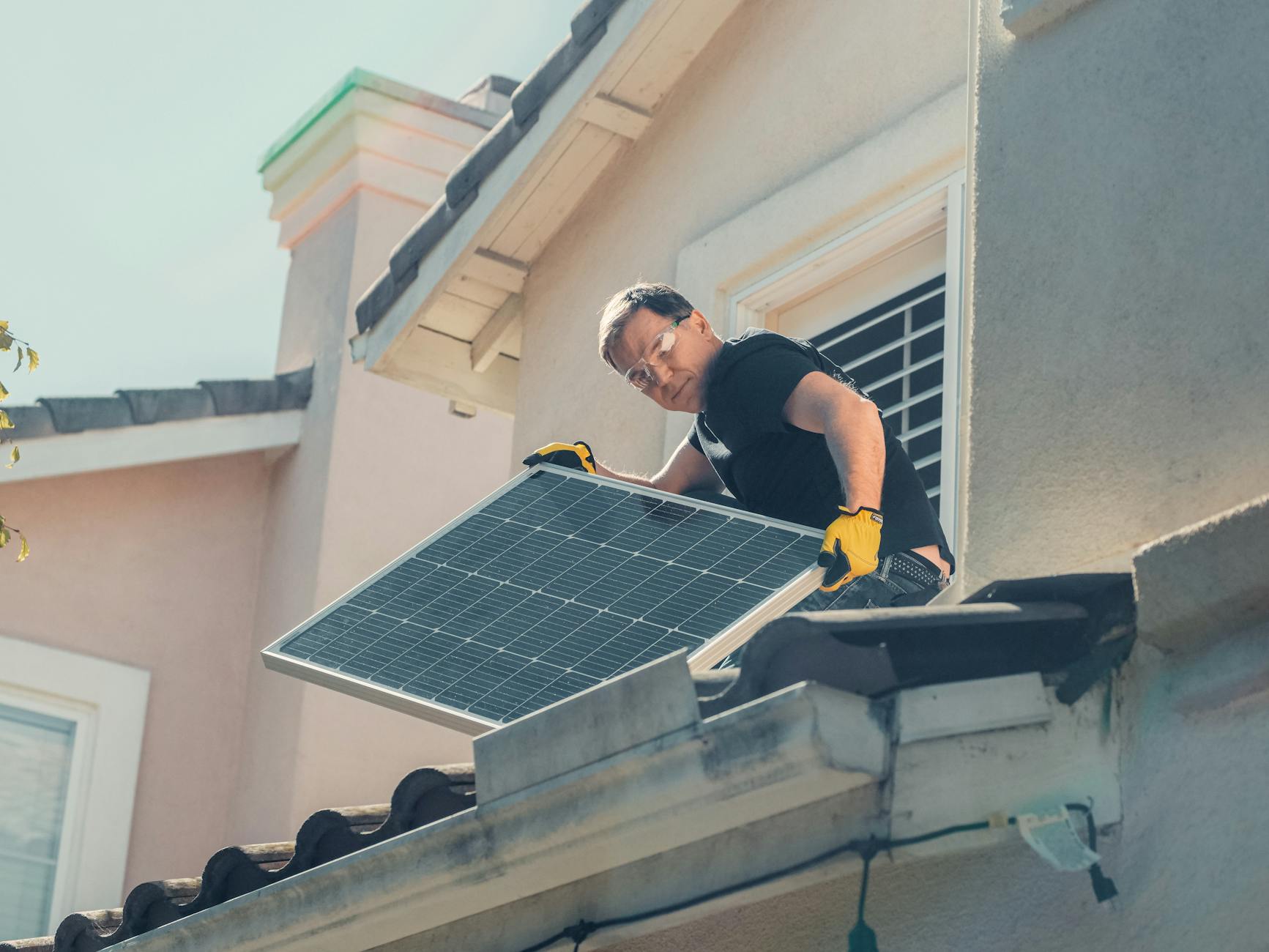
The LEW certificate costs nothing extra — your installer is required to provide it. Hand it to your insurer before they ask for it. That single document resolves the compliance question for fire risk, wiring quality, and regulatory approval simultaneously.
The LEW requirement is explained in detail in the Singapore LEW guide. For the full cost of a Singapore solar installation, see the cost breakdown.
Further reading: MAS insurance industry guidelines · BCA solar panel structural requirements.
Is solar panel damage covered under HDB fire insurance in Singapore?
HDB-mandated fire insurance, provided through NTUC Income for HDB flat owners, covers the building structure but not contents or fixtures added by the occupant. Since HDB flats cannot individually install rooftop solar (the roof is common property managed by HDB), this question applies primarily to private landed property homeowners. For private homes, check whether your existing home insurance policy's building coverage definition includes fixtures and improvements added to the building, most do, subject to a declaration requirement. If you are renting and the landlord installs solar, the landlord's building insurance must cover the panels; your tenant's content insurance covers your belongings only.
What happens to my home insurance if the solar installation causes damage to a neighbour's property?
Third-party liability for property damage caused by your solar installation (for example, panels detached in a storm damaging a neighbour's car or extension) falls under the liability section of your home insurance policy. Most Singapore home contents and building policies include a public liability component of S$500,000 to S$1,000,000. The key condition is that the installation must be properly declared and the installation itself must be compliant (LEW certificate, correct structural mounting). An undeclared or non-compliant installation may result in the insurer denying the third-party liability claim on the basis that the risk was not disclosed or was non-compliant.
See your numbers
What does this mean for your home?
Tariffs and technology change the math. The calculator uses current SP figures to show your actual payback and savings.