
How Much CO2 Does a Singapore Solar System Offset? The Full Calculation
A Singapore 10kWp solar system generates 11,060 kWh per year and avoids 4.49 tCO2 annually at the current grid emission factor of 0.4057 kgCO2/kWh. Over 25 years, that is approximately 100 tonnes of avoided emissions — with a monetary equivalent that rises as Singapore's carbon tax increases.
Key Takeaways
- 1
A 10kWp Singapore solar system avoids approximately 4.49 tonnes of CO2 per year, based on EMA's 2024 grid emission factor of 0.4057 kgCO2/kWh
- 2
Over a 25-year system lifetime, one Singapore 10kWp rooftop avoids approximately 100 tonnes of CO2 — equivalent to removing one petrol car from the road for 10 years
- 3
Singapore's carbon tax of S$45 per tonne in 2026 embeds approximately S$202 of avoided carbon cost into your annual solar savings — rising to S$359 per year if the tax reaches S$80/tonne by 2030

Solar panels save money. They also displace grid electricity generation that emits CO2 from natural gas combustion. In Singapore, where the grid is predominantly gas-fired, every kWh generated from a rooftop panel avoids a measurable and calculable quantity of greenhouse gas emissions. Here is the full arithmetic, using Singapore's published emission factor.
The Singapore Grid Emission Factor
EMA publishes Singapore's grid emission factor annually in the Singapore Energy Statistics report. The 2024 figure is 0.4057 kgCO2 per kWh of electricity consumed. This factor converts any kWh quantity into its CO2-equivalent based on the actual fuel mix of Singapore's generators in that year. As the grid incorporates more low-carbon energy (solar, imported hydro, eventually hydrogen), the factor will decline, meaning solar's per-kWh CO2 displacement becomes smaller in absolute terms as the grid itself decarbonises.
For 2026 planning purposes, 0.4057 kgCO2/kWh is the appropriate figure. Check the EMA website for the most current annual update.
The Full 10kWp CO2 Calculation
Annual generation: 10kWp × 1,106 kWh/kWp = 11,060 kWh per year
Annual CO2 avoided: 11,060 kWh × 0.4057 kgCO2/kWh = 4,487 kg = 4.49 tonnes of CO2 per year
25-year lifetime total: Accounting for 0.5% annual panel degradation (cumulative generation of approximately 248,000 kWh over 25 years): 248,000 × 0.4057 = approximately 100.6 tonnes of CO2 avoided
These figures assume solar generation fully displaces grid generation at the average emission factor. In practice, daytime solar may displace more efficient peaking plant during some periods and less during others, the average factor is the correct planning figure.
Putting It in Perspective: Equivalents
Abstract tonne figures are difficult to contextualise. Here are the equivalent activities for a 10kWp Singapore solar system's lifetime output of 100 tonnes of CO2:
Petrol car driving: An average Singapore petrol car emits approximately 130 to 160 gCO2/km. At 25,000 km per year, that is 3.25 to 4 tonnes per year. One solar rooftop's lifetime avoidance equals 25 to 30 years of one car's driving.
Flights: A return flight Singapore to London emits approximately 5 to 6 tonnes of CO2 per passenger depending on aircraft type. The system's lifetime avoidance is equivalent to approximately 17 to 20 return flights to London.
Electricity consumption: 100 tonnes ÷ 0.4057 kgCO2/kWh = approximately 246,000 kWh, roughly 20 years of average Singapore household electricity use (at approximately 500 kWh per month).
The Carbon Tax Monetary Equivalent
Singapore's carbon tax is S$45 per tonne in 2026, rising to S$50 to S$80 per tonne by 2030. This tax is applied to large industrial emitters, not directly to households, but it flows into electricity tariffs as generators pass the cost through. Solar generation sidesteps this carbon cost entirely on every kWh generated.
The monetary value of your system's CO2 avoidance at current and projected tax rates:
4.49 tCO2/yr × S$45/tonne (2026): S$202 per year in avoided carbon cost embedded in your tariff saving.
4.49 tCO2/yr × S$80/tonne (by 2030): S$359 per year in avoided carbon cost, one meaningful component of the continued improvement in solar financial returns as the carbon price escalates.
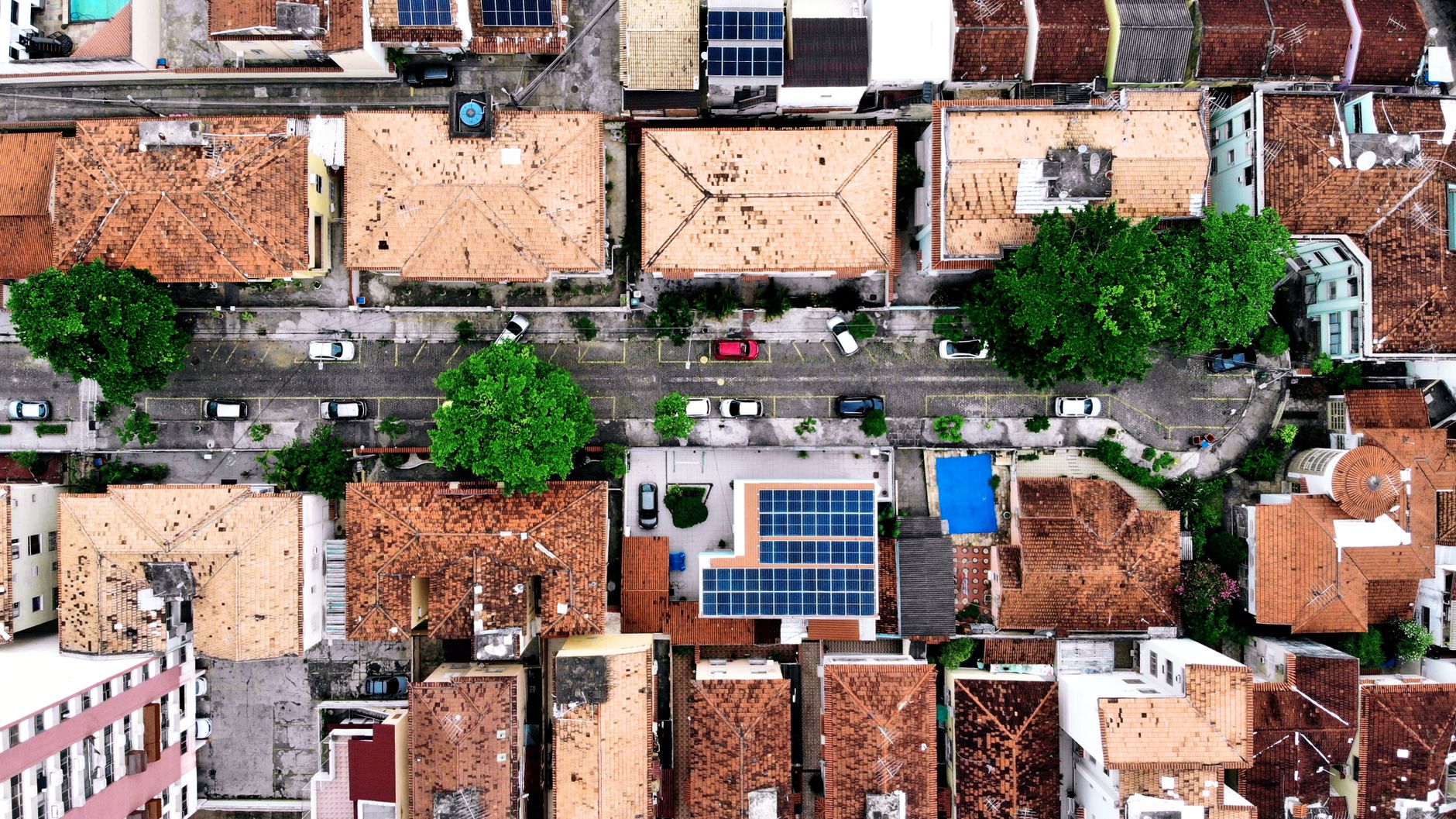
One Singapore solar rooftop avoids roughly 100 tonnes of CO2 over its working life — equivalent to grounding one petrol car for a decade. The financial return and the environmental case are pointing in exactly the same direction.
The carbon tax and its effect on electricity tariffs are covered in detail in the carbon tax and solar savings guide. For your specific system size and CO2 offset calculation, run the Sunnify estimate tool.
Further reading: NCCS Singapore emissions data · NEA Singapore greenhouse gas statistics · IRENA renewable energy carbon displacement.
Does EMA's grid emission factor change every year? Which figure should I use for calculations?
Yes, EMA updates the grid emission factor annually as part of the Singapore Energy Statistics report. The figure changes as the fuel mix of Singapore's generation fleet changes, gas plant retirements, new solar capacity, and any imported low-carbon electricity all shift the average. For planning a new installation, use the most recently published EMA figure. The 0.4057 kgCO2/kWh figure is from the 2024 Singapore Energy Statistics publication. As Singapore adds more solar and pursues low-carbon imports, the factor is expected to decline gradually over the decade, which means the per-kWh CO2 avoidance of rooftop solar will also decline in absolute terms, even though the financial savings from solar will likely hold or increase as tariffs rise.
Can I sell carbon credits from my Singapore solar system?
As of 2026, there is no established mechanism for Singapore residential solar homeowners to monetise carbon credits from their generation. Singapore's carbon market framework (the International Carbon Credits framework under the Carbon Pricing Act) primarily addresses large industrial emitters purchasing credits, not households generating credits for sale. The financial benefit of your solar system's CO2 avoidance is captured indirectly through the electricity tariff, as carbon costs are embedded in the tariff you no longer pay, rather than through a tradeable certificate you receive. If a retail voluntary carbon credit scheme for residential solar were to launch in Singapore, it would be administered through EMA or a licensed credit registrar and would require metered generation data from your SP Group account.
See your numbers
What does this mean for your home?
Tariffs and technology change the math. The calculator uses current SP figures to show your actual payback and savings.