How Solar Export Works in Singapore: SP Group Credits Explained
Singapore's ECIS pays S$0.2581/kWh for exported solar. Here is exactly how the credit system works and how to maximise it.
Why should this article concern you?
- 1
SP Group credits exported solar at S$0.2581/kWh via the Enhanced Central Intermediary Scheme
- 2
A 10kWp terrace house earns roughly S$2,142/year in export credits plus S$961 in self-consumption savings
- 3
Every kWh exported earns S$0.0897 less than a kWh self-consumed, making daytime usage shifts worth real money

Every Singapore landed home with rooftop solar has two revenue streams, and most owners only pay attention to one. Your panels generate electricity. Some you use directly. The rest flows back into the national grid, and SP Group credits that energy to your bill at a published rate. Understanding the gap between what you earn on export and what you would pay on import is the single most useful number for sizing your system and changing your daily habits.
The Scheme That Makes Export Pay: ECIS Explained
The Enhanced Central Intermediary Scheme (ECIS), administered by the Energy Market Authority, is the framework that lets residential solar owners sell surplus electricity to the grid without negotiating a contract with any retailer. SP Group acts as the buyer of last resort, purchasing every kilowatt-hour your system exports at the prevailing rate. The rate is not a special deal or a subsidy. It is calculated as the pre-GST SP Group residential tariff minus a fixed grid charge.
The current export credit rate is S$0.2581/kWh. The current import tariff is S$0.3478/kWh inclusive of 9% GST, confirmed by EMA via data.gov.sg for Q3 2026. The gap between those two numbers is S$0.0897/kWh, and that gap is the core reason self-consumption beats export every time.
The S$0.0897 Gap and Why It Drives Every Sizing Decision
Each unit of electricity your panels generate has a choice: power your air-conditioner right now, or flow to the grid for a credit. Running the aircon saves you S$0.3478. Exporting earns you S$0.2581. That S$0.0897 difference seems small per unit. Across an annual generation figure of 11,060 kWh for a standard 10kWp terrace house system, the routing of those kilowatt-hours determines hundreds of dollars per year.
The Sunnify default assumption is 25% self-consumption for a typical Singapore terrace house with occupants out during the day. At that split, your 2,765 kWh of self-consumed generation saves S$961/year, and your 8,295 kWh of exports earns S$2,142/year, for a combined annual benefit of roughly S$3,103. Shift that self-consumption ratio to 40% through daytime usage habits and the same system delivers closer to S$3,540/year, a gain of more than S$430 without changing a single panel.
Note: The export credit rate adjusts each quarter alongside the regulated tariff, so the exact S$ figures above will shift slightly over time. Confirm the current rate at SP Group's solar page before finalising your financial model.
From Installation to First Credit: The SP Group Timeline
Your installer submits the SP Group grid connection application after your system passes the electrical inspection by a Licensed Electrical Worker. SP Group typically takes four to eight weeks to process the application, install a bi-directional meter, and activate export credits on your account. You will not earn export income during this window, though your panels may already be generating and self-consumed power is offsetting your bill from day one.
Once activated, your ECIS registration persists automatically. You do not re-apply each year or renegotiate the rate. The credit appears as a line item on your monthly SP Services bill, described as "Solar Generation Credit" or similar, and it offsets your payable amount directly. If your credits exceed your consumption in a given month (rare for most households but possible in very sunny months with low occupancy), the surplus credit carries forward to the next bill.
What Your SP Bill Looks Like After Solar
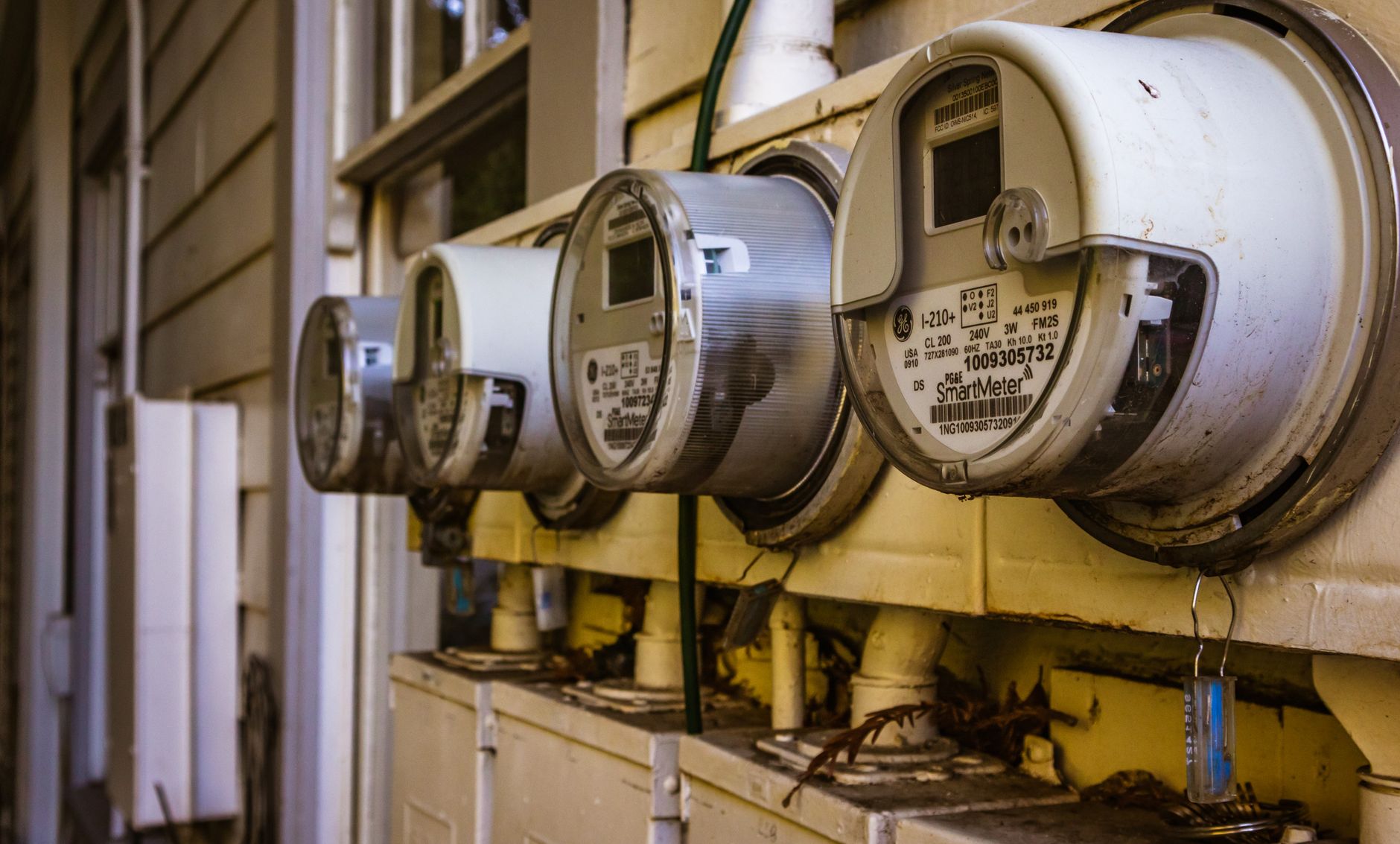
Your SP bill gains two new lines after solar activation. The first shows your grid consumption for the month, which drops significantly compared to pre-solar periods. The second shows your solar generation credit, the product of your exported kWh and the S$0.2581/kWh rate. For a 10kWp terrace house in a month with 920 kWh of generation, you might export around 690 kWh, earning a credit of approximately S$178 that SP Group deducts from your balance before you pay anything.
Many terrace house owners on a 10kWp system see their net monthly bill fall to between S$20 and S$60, down from a typical pre-solar bill of S$180 to S$260. The exact outcome depends on your occupancy, the number of aircon units running, and whether your EV or water heater load falls in the daytime or evening. The full guide to SP Group export credits walks through how each appliance affects the split.
Shifting Usage to Capture the Full Self-Consumption Advantage
Your inverter converts DC from your panels to AC in real time. When generation exceeds demand, the surplus exits through your meter to the grid. When demand exceeds generation, you draw from the grid. The goal is to align your largest loads with peak generation hours, roughly 9am to 3pm in Singapore's equatorial sun profile.
Three appliances make the biggest difference. A dishwasher on a morning timer draws around 1.2 kWh per cycle: scheduled at 10am, that is grid-free. EV charging is the most powerful lever: a 7kW home charger running for two hours at noon consumes 14 kWh that would otherwise be drawn from the grid at night at S$0.3478/kWh, saving S$4.87 in that session alone. Pool pumps on terrace houses with private pools are the third: a 1.5kW pump running six daytime hours uses 9 kWh of solar that would otherwise be exported at the lower rate. Run your own estimate with an adjusted self-consumption ratio to see the exact dollar difference for your terrace house.
Sizing Your System Around the Export Gap
The export gap tells you something concrete about system size: a larger system amplifies export volume faster than it amplifies savings, because the additional generation beyond your daytime usage all flows out at the lower rate. A 10kWp system on a terrace house occupied by a family with daytime usage habits is typically well-matched. Scaling to 15kWp on the same household with the same usage profile pushes export to roughly 12,443 kWh/year, earning S$3,213 in credits, while self-consumption savings reach S$1,443, for a total of S$4,656/year according to Sunnify estimates.
The 15kWp system costs more upfront, roughly S$15,000 to S$22,000, and the payback period runs approximately 3.2 to 4.7 years. Whether the jump from 10kWp to 15kWp makes sense depends on your roof area, shade obstructions, and how much of your consumption genuinely falls between 9am and 3pm. Check your roof suitability before committing to the larger system.
Every unit your panels generate has a choice: power your home and save S$0.3478, or flow to the grid and earn S$0.2581. The whole game is shifting that choice in your favour.
Make the Numbers Work for Your Terrace House
The ECIS framework is permanent infrastructure, not a temporary incentive with an expiry date. SP Group has administered residential solar credits continuously since 2015, and the EMA's solar deployment targets under the Singapore Green Plan 2030 make regulatory continuity a near certainty. You are not betting on a policy that might disappear. You are locking into a rate mechanism that adjusts with the tariff, meaning your export income rises when grid electricity gets more expensive.
When you run your estimate and look at the 25-year picture, factor in two things most people miss: the historical tariff trend of 3 to 5% per year means your export rate will likely be higher in year ten than it is today, and your panel output will degrade only 0.5% per year over that period, leaving you generating at roughly 88% of day-one capacity in year twenty-five. The system you install today is the same system earning credits in 2051. Each quarter that passes without solar on your terrace house roof is a quarter where your neighbour's credit line grows and yours does not.
How does SP Group calculate my solar export credit each month?
SP Group's bi-directional meter records the kilowatt-hours your system sends to the grid each month. That figure is multiplied by the current ECIS export rate, which sits at S$0.2581/kWh for Q3 2026. The resulting credit appears as a deduction on your monthly electricity bill before you pay. The rate adjusts quarterly in line with the regulated tariff, so it rises when grid electricity costs more and falls when it costs less.
How long does it take to get solar export credits activated after installation?
After your system passes its electrical inspection and your installer submits the SP Group grid connection application, SP Group typically takes four to eight weeks to install a bi-directional meter and activate your ECIS export credits. Self-consumed generation offsets your bill from day one even before export credits are active. You can track the application status directly with SP Group using the reference number your installer provides at submission.
More from Sunnify Solar Releases